Cooling strategies that support occupant comfort, regulatory compliance and long-term operational efficiency across commercial environments.
Commercial buildings place unique demands on HVAC systems. Cooling must balance occupant comfort, indoor air quality and reliable operation, while meeting energy efficiency standards, noise regulations and sustainability targets.
Offices, mixed-use developments, public buildings and large commercial estates each present different operational and design challenges. JAEGGI works with consultants, engineers and building operators to define cooling strategies that align with building performance goals and lifecycle expectations.
Cooling performance directly shapes how a building is experienced, operated and valued.
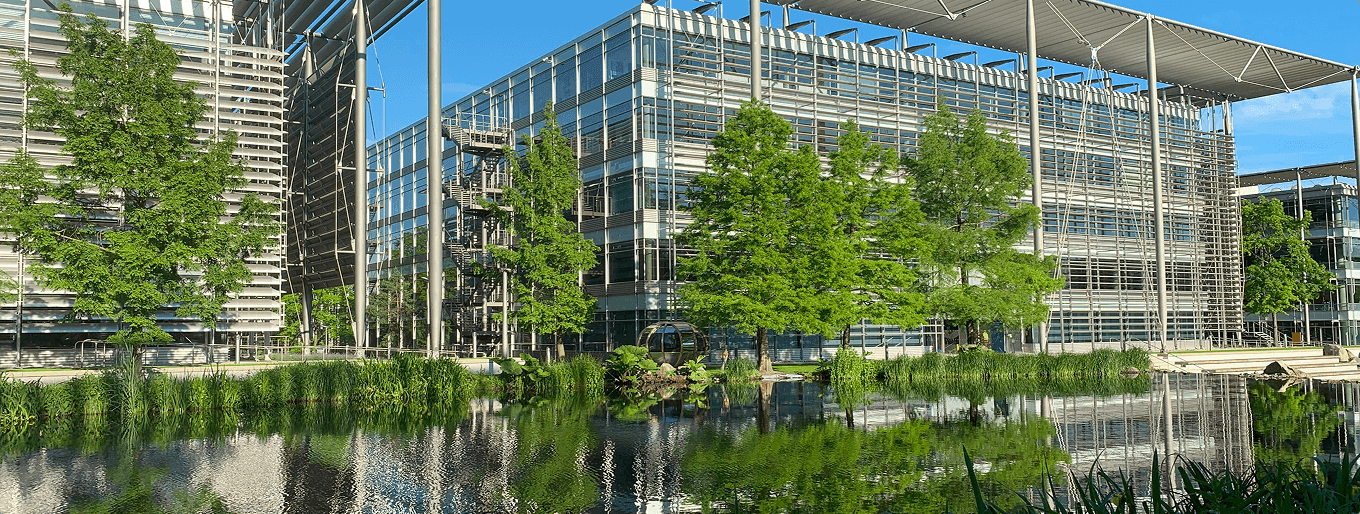
Cooling challenges in commercial buildings
HVAC systems in commercial buildings operate in close proximity to occupants and surrounding environments. Noise levels, visual impact and space availability often influence cooling system design as much as thermal load.
Many commercial sites are located in dense urban areas or retrofit buildings, where plant space is limited and planning requirements are strict. Cooling strategies must integrate seamlessly with building design while remaining reliable and efficient across changing occupancy patterns and seasonal conditions.
These constraints require cooling approaches that are both technically robust and architecturally considerate.
Noise & visual impact
Limited plant space
Changing occupancy
Architectural integration
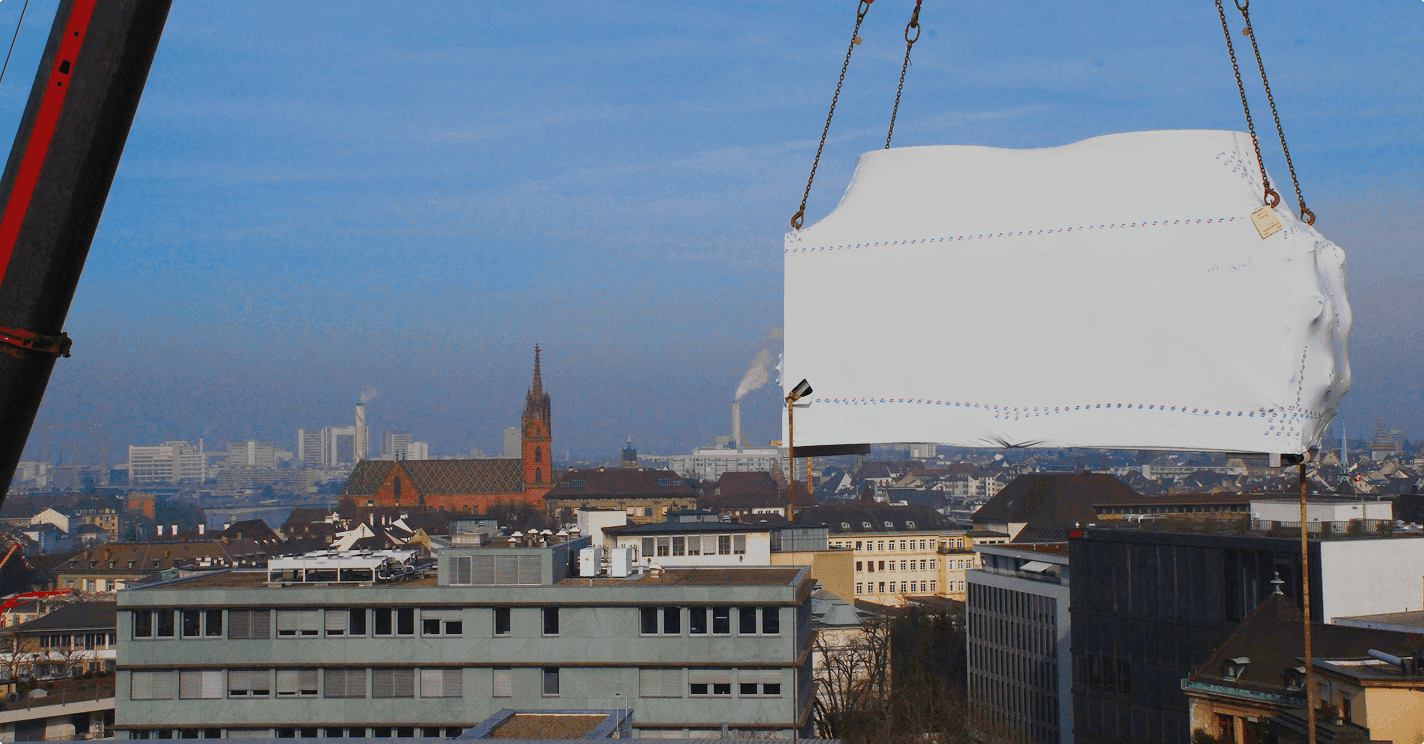
Comfort, efficiency and compliance
In commercial environments, cooling performance directly affects occupant experience and work output. Temperature stability, acoustic comfort and consistent operation all contribute to how a building is perceived, used and retained by occupants.
At the same time, building owners face increasing pressure to reduce energy consumption, manage operating costs and meet evolving regulatory and sustainability requirements. Cooling strategies must therefore support comfort and compliance today, while remaining adaptable to future standards and usage patterns.
The most effective HVAC strategies balance human comfort with long-term operational responsibility.
An integrated cooling strategy for buildings
JAEGGI supports HVAC and commercial building projects by aligning cooling strategies with architectural, operational and environmental considerations.
Rather than treating cooling as a standalone system, our teams consider how it interacts with the wider building infrastructure, including space constraints, acoustic sensitivity, energy performance targets and long-term use.
This integrated approach ensures cooling systems contribute positively to overall building performance, not just thermal control.
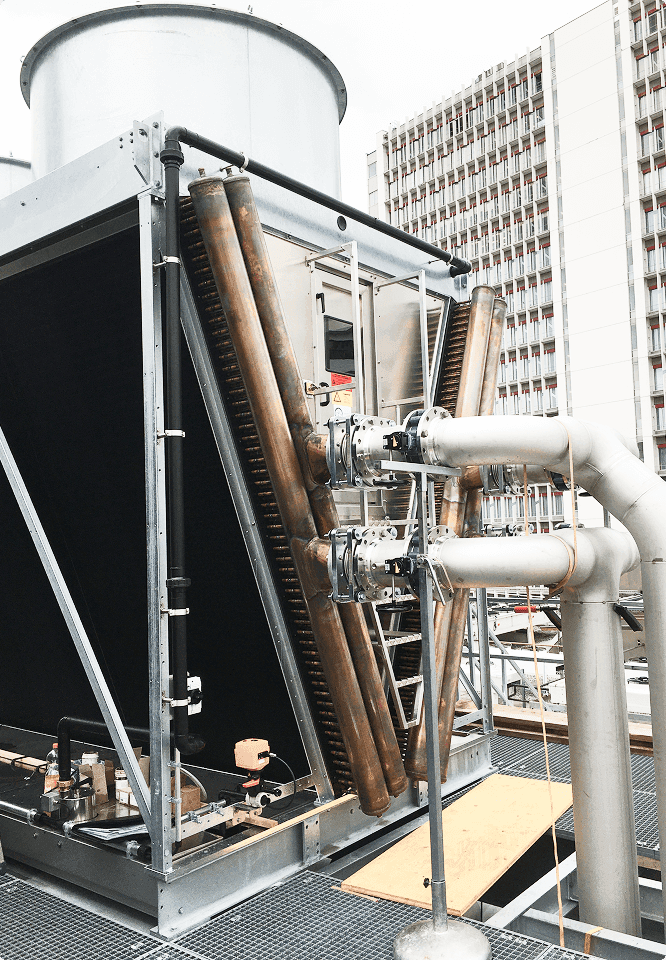
Approaches commonly applied in HVAC systems
Depending on building type and location, HVAC cooling strategies may prioritise quiet operation, compact installation or improved energy efficiency. In many cases, cooling approaches must also support sustainability objectives and compliance with building standards.
In practice, commercial buildings often require a combination of approaches to balance comfort, efficiency, space and regulatory demands over time.
Selecting the most appropriate strategy depends on understanding how these factors interact within each specific building context.
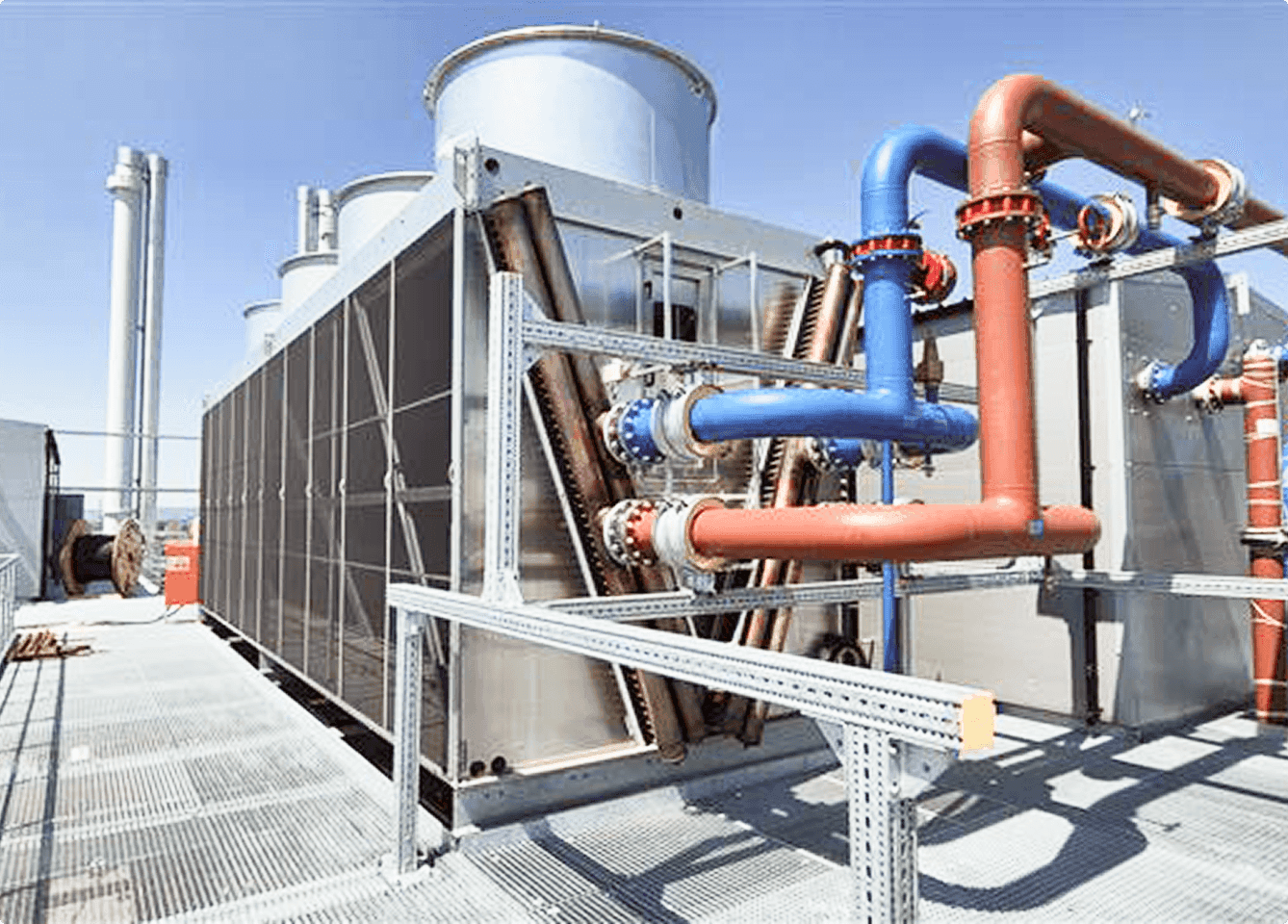
Commercial cooling in practice
JAEGGI has supported HVAC cooling projects across a wide range of commercial buildings, where comfort, compliance and efficiency were equally important.
These projects demonstrate how carefully defined cooling strategies support building performance, regulatory requirements and long-term operational stability, even within challenging site constraints.

Cooling that supports long-term building performance
Commercial buildings evolve over time. Changes in occupancy, refurbishment programmes and regulatory requirements can all influence cooling demands.
Cooling strategies must therefore be designed with flexibility in mind, allowing systems to adapt without significant disruption or fundamental redesign.
By considering lifecycle performance early, cooling approaches can be developed that continue to support comfort, efficiency and compliance as building needs change.