Cooling projects are no longer evaluated solely on thermal output. Water availability, cost and environmental impact now play a central role in determining which cooling strategies are viable.
Some sites operate in regions affected by water scarcity. Others are bound by internal sustainability targets, restrictions on potable water use or regulatory frameworks that demand tighter control of consumption. In these contexts, cooling systems must perform reliably while using water only where it delivers genuine value.
Managing design trade-offs
Water has traditionally been used to support cooling performance during challenging ambient conditions. Reducing or removing that dependency is not straightforward.
A poorly balanced approach can introduce instability, increase energy demand or limit peak performance. Simply reducing water use without understanding system behaviour often shifts risk elsewhere.
Achieving meaningful reductions in water dependency requires a detailed understanding of operating profiles, climate conditions and system response over time, not just a change in operating mode.
Managing water use balance
Water-efficient cooling strategies aim to limit water use while maintaining reliable operation during demanding ambient conditions. Eliminating water entirely is rarely practical or desirable.
If water use is not carefully controlled, systems may experience instability, higher energy demand or reduced peak performance. Applying water without clear intent can displace risk rather than remove it.
Effective water efficiency is achieved through a detailed understanding of load profiles, climate conditions and system response over time, allowing water to be used only where it delivers clear operational value.
Common operating contexts
Water availability and efficiency requirements influence cooling system design from the earliest stages. Treating water use as a core system parameter ensures performance, efficiency, and sustainability objectives are addressed together rather than managed as operational compromises later.
Water-efficient cooling is achieved by minimizing reliance on water while maintaining stable performance across the full operating range of the system.
By considering water use early, JAEGGI engineers balance cooling capacity, energy efficiency, and resource consumption across real operating conditions.
A structured engineering approach enables:
Targeted water use only where it adds performance value
Lower operational and regulatory water risk
Stable cooling during peak demand

Optimized dry and adiabatic operation

Typical applications
Water-efficient cooling approaches are typically applied where water availability, consumption limits, or sustainability targets constrain system operation. This includes regions with limited water resources, sites with ESG commitments, and applications where potable water use must be controlled.
In these environments, cooling systems must maintain reliable, efficient performance across changing loads and conditions while minimizing unnecessary water use.
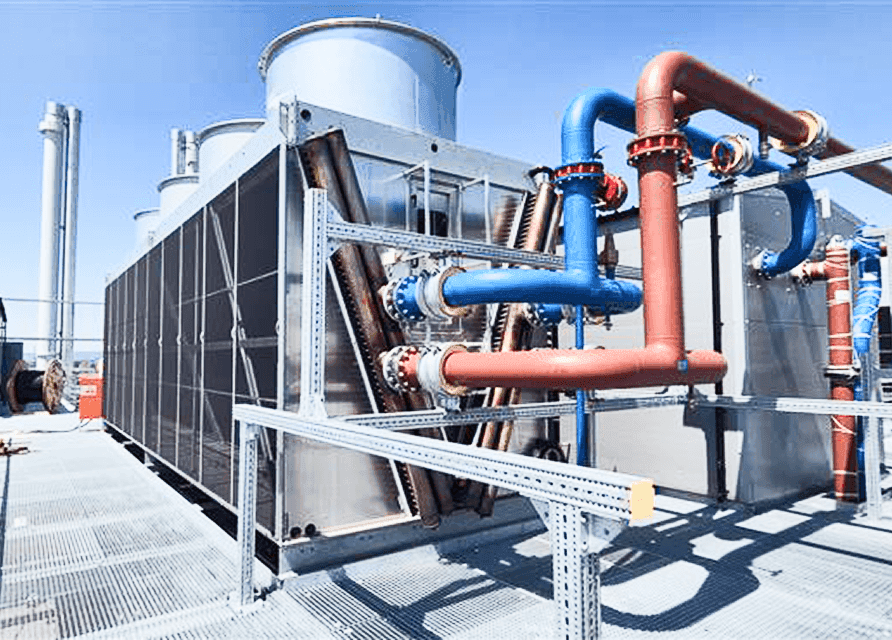
Applied efficiency-led cooling
JAEGGI has delivered cooling solutions where energy efficiency and controlled water use were critical, alongside the need to meet defined acoustic limits.
These projects demonstrate how system-level engineering supports reliable cooling performance under real operating conditions, optimizing energy and water use without introducing unnecessary complexity or operational compromise.
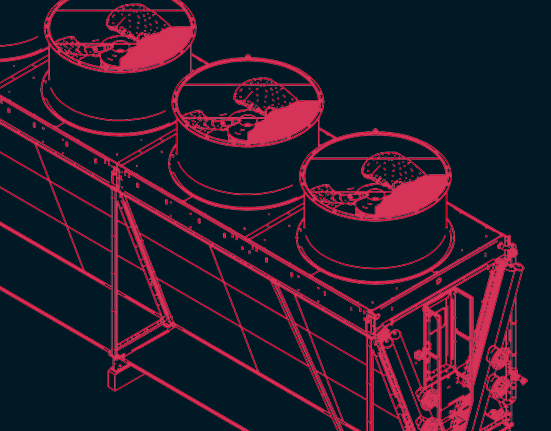
An efficiency-led design approach
Efficient cooling starts with understanding how energy use, water consumption, and operating conditions interact. JAEGGI engineers assess these factors together to define cooling strategies aligned with real system demands.
By addressing efficiency early in the design process, systems can be optimized for reliable operation with reduced energy and water use over the long term.
Optimizing efficiency under real constraints
JAEGGI supports the development of cooling solutions that prioritize energy efficiency and controlled water use while operating within site-specific constraints. By optimizing system design at an early stage, cooling performance is maintained across real operating conditions without unnecessary resource use or operational risk.