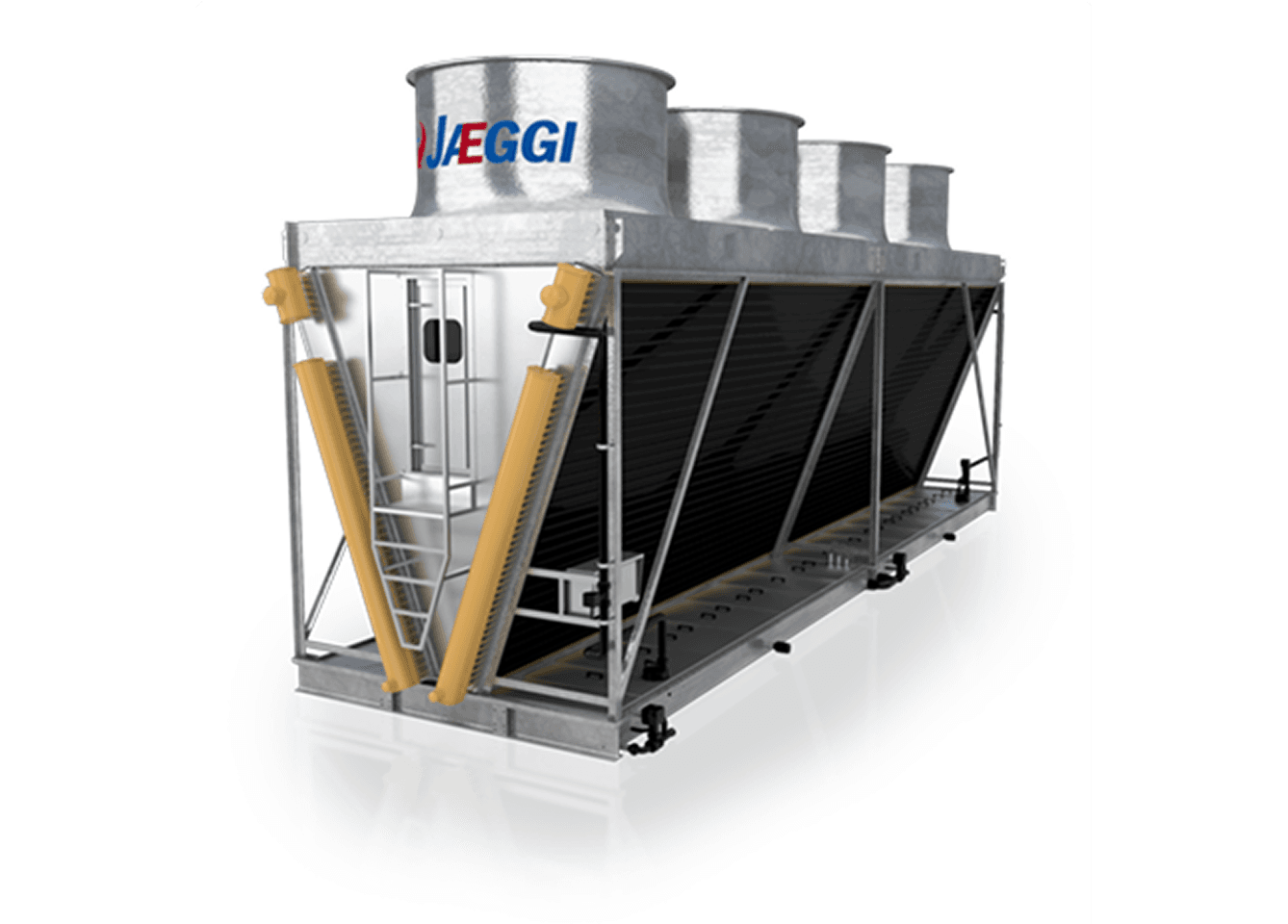
Condensers
High-performance air-cooled condensers engineered for reliable heat rejection across industrial, commercial, and infrastructure applications. Condensers perform a critical role within refrigeration and cooling systems, enabling stable and efficient heat rejection under defined operating conditions. JAEGGI condensers are engineered to deliver predictable thermal behavior in systems operating under continuous load, variable ambient conditions, and demanding environments. Designed for subcritical applications, these units combine robust construction with efficient heat exchanger design to support long-term operational reliability. Stable heat rejection underpins overall system efficiency and control.
What Are Condensers?
JAEGGI offers air-cooled condenser solutions designed to support reliable heat rejection across a wide range of refrigeration and HVAC applications. JAEGGI condensers are intended for subcritical systems where heat is rejected as the refrigerant condenses from gas to liquid. These units are commonly applied in conventional refrigeration and HVAC systems operating within defined pressure and temperature ranges. This focused portfolio allows engineers to select condenser solutions aligned to refrigerant type, system design, and operating regime, while maintaining consistent engineering standards, robust construction, and predictable thermal performance across the JAEGGI range.
Designed for reliability and efficiency
JAEGGI condensers are engineered with a focus on performance stability, durability, and efficient operation across varying load profiles. These characteristics help maintain predictable system behavior and reduce operational risk across the equipment lifecycle.
How Condensers operate
JAEGGI condensers are engineered to maintain stable heat rejection across changing loads and ambient conditions through coordinated mechanical design and control. Heat exchanger geometry, airflow distribution, and fan regulation are configured to support consistent condensation and predictable system pressures across defined operating envelopes. Optimized coil design and responsive fan control help maintain thermal stability under fluctuating ambient temperatures, enabling consistent system behavior and supporting long-term reliability in demanding applications.
Where Condensers are used
JAEGGI condensers are applied across a wide range of sectors where dependable heat rejection is essential. Application requirements vary by sector, operating profile, and system design, making correct product selection critical to long-term performance.
Industrial refrigeration and process cooling
Energy and power infrastructure
Commercial HVAC and large buildings
Food production and cold storage
Data centers and technical facilities
Designed for flexible system integration
JAEGGI condensers are designed to integrate into a wide range of refrigeration and cooling architectures. Considerations such as control strategy, refrigerant selection, ambient conditions, and operating cycles are addressed early in the design process to support reliable and efficient system performance. JAEGGI’s engineering teams provide support from early planning through to commissioning, helping ensure products perform as intended within the wider system.
Technical information and product support
Comprehensive technical documentation is available to support specification, installation and operation. This includes performance data, dimensional drawings and system guidance to enable accurate selection and reliable implementation.

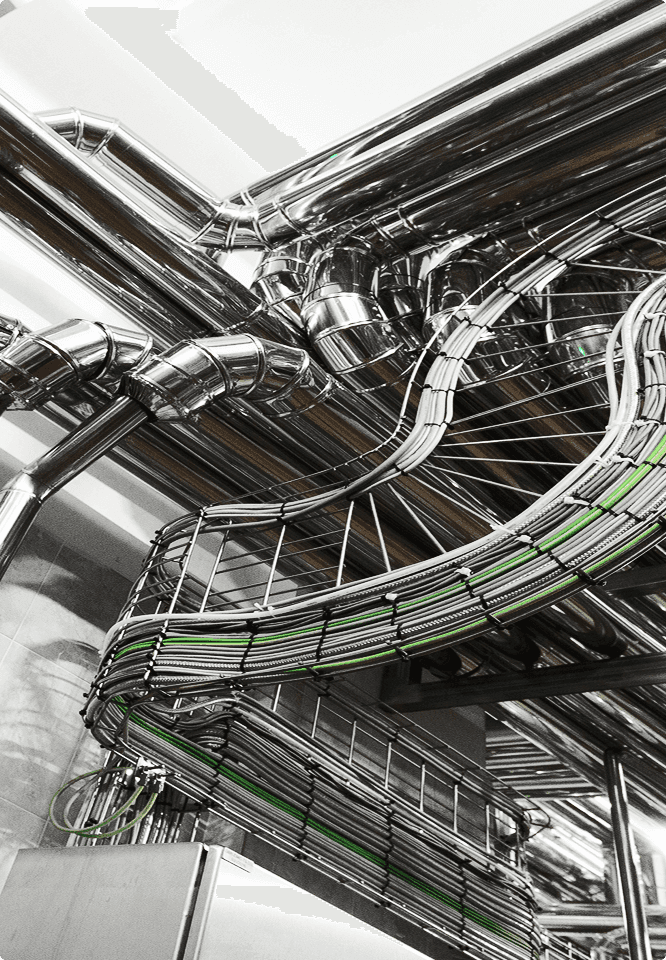
Condensers in operation
JAEGGI condensers have been deployed across demanding installations where stable heat rejection is essential.
These applications demonstrate reliable operation under real-world conditions, supporting long-term system performance across a wide range of use cases.