Hybrid cooling is an engineering solution for sites where space, noise or water constraints make conventional cooling impractical.
It is applied when standard dry or wet systems cannot meet performance requirements, using system-level engineering to deliver reliable, predictable outcomes without compromise.
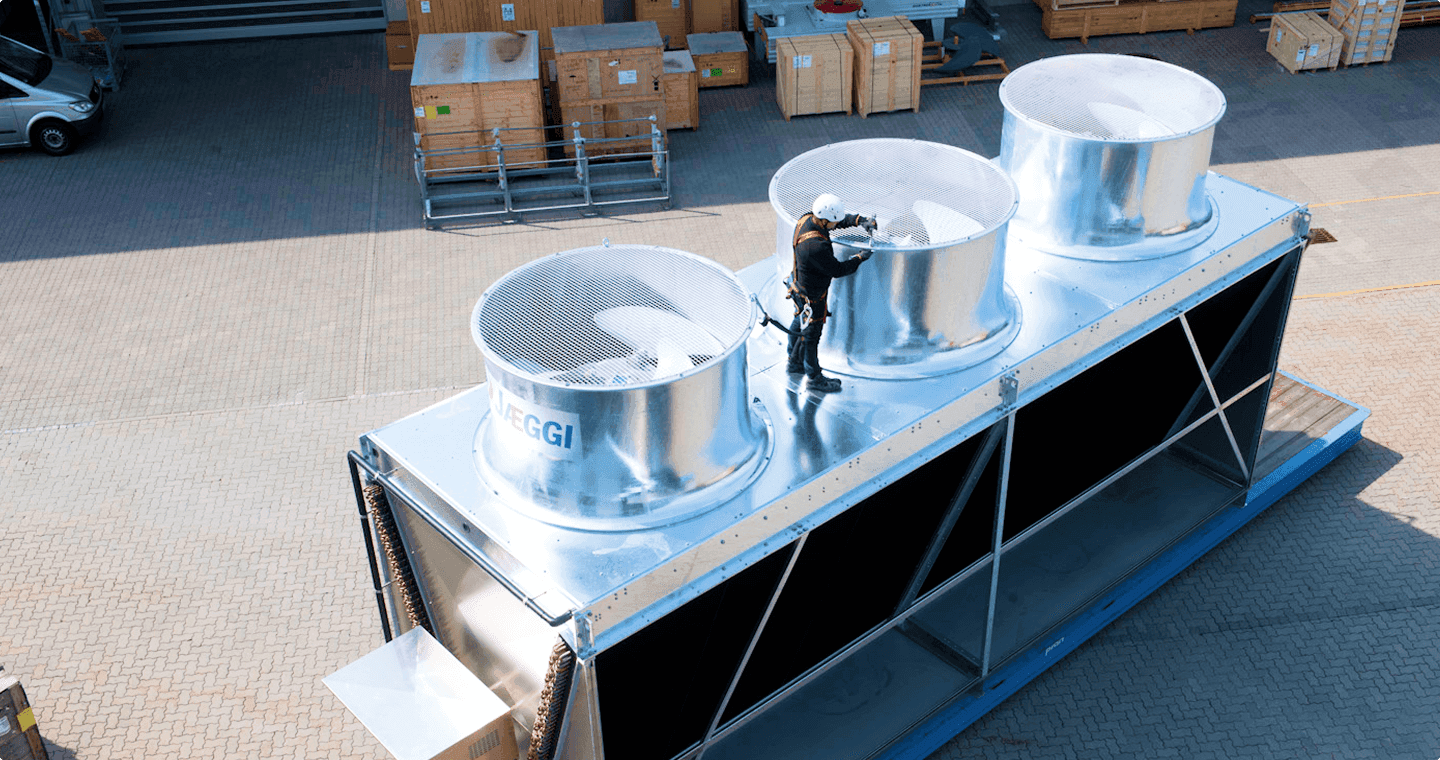
Cooling where space is limited
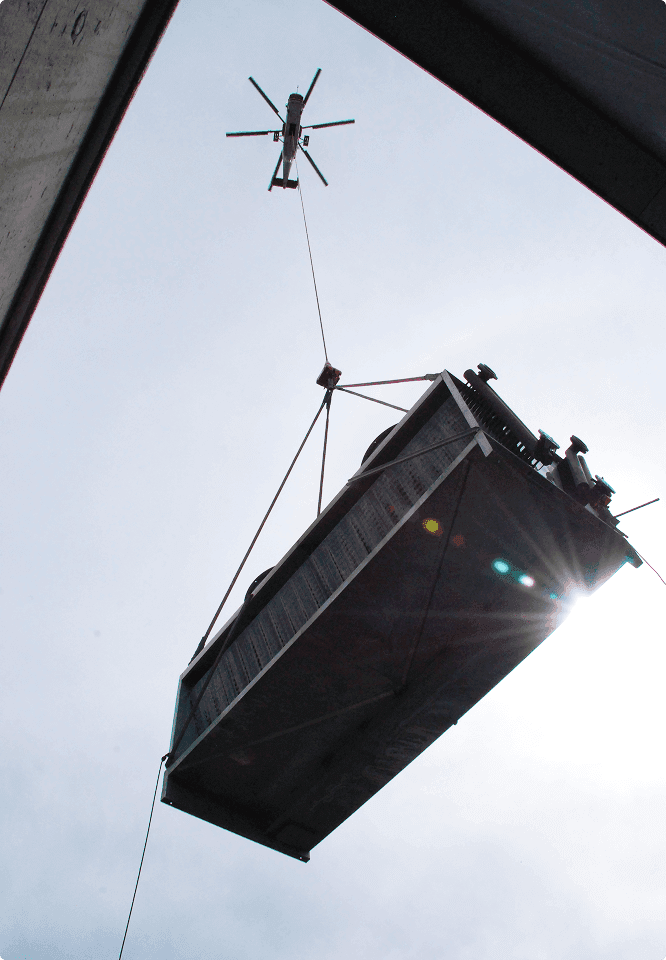
Many modern cooling projects are defined as much by physical constraints as by thermal load. Urban locations, retrofit installations and dense infrastructure often leave little room for traditional cooling layouts.
In these environments, engineers must deliver high cooling capacity within restricted footprints while still meeting planning, noise and operational requirements. Increasing performance without increasing physical size becomes the central challenge.
In such cases, hybrid cooling approaches can provide a practical path to higher performance where dry-only solutions reach their limits.
The limits of traditional cooling methods
Conventional dry cooling systems can struggle to deliver sufficient performance in restricted spaces, particularly during periods of high ambient temperature. Wet-only solutions may reduce footprint, but often introduce challenges related to water consumption, plume formation, hygiene and regulatory compliance.
When space is limited, these trade-offs can restrict system performance, increase operational complexity or limit future flexibility, creating the need for a different engineering approach.
Balancing performance, space and sustainability
A hybrid cooling approach balances dry operation with adiabatic support, allowing systems to adapt dynamically to ambient conditions and site constraints.
Rather than relying on a single operating mode, hybrid cooling provides engineers with greater flexibility when performance, space and sustainability requirements compete.
A well-engineered hybrid approach enables:
High cooling capacity within a compact footprint
Reduced dependency on water compared to wet-only systems

Stable performance during peak temperature periods

Support for compliance with noise and planning requirements

Typical Environments
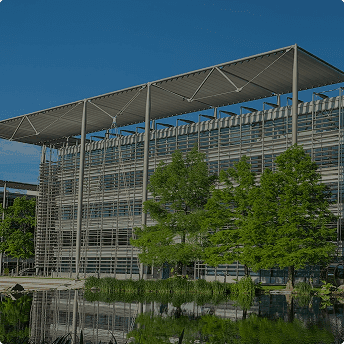
Hybrid cooling solutions are commonly applied in environments where spatial, environmental and operational pressures converge. These include data centres with restricted rooftop space, hospitals and healthcare facilities requiring quiet and reliable operation, airports and transport hubs subject to planning constraints, and industrial or research sites where expansion options are limited.
Hybrid cooling in practice
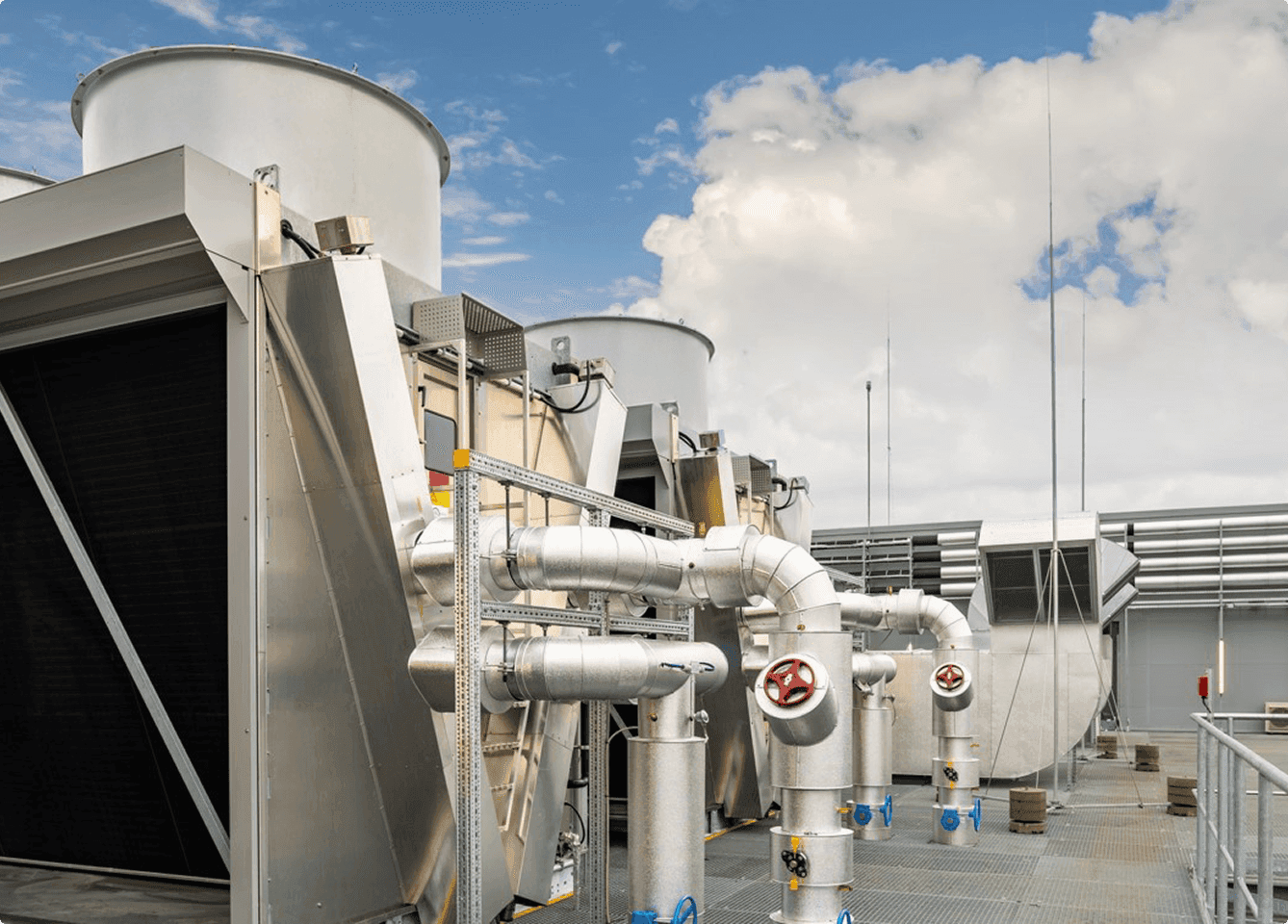
JAEGGI has delivered hybrid cooling solutions across a wide range of complex installations, where space constraints, noise sensitivity and sustainability targets required a carefully engineered approach. These projects demonstrate how hybrid cooling performs under real operating conditions, supporting reliable operation where conventional approaches would struggle.

A consultancy-led engineering process
Every hybrid cooling solution begins with understanding the challenge, not selecting equipment. JAEGGI’s engineers assess site conditions, performance requirements and long-term operational priorities before defining the appropriate cooling strategy.
By focusing on constraints first, hybrid cooling is applied only where it delivers genuine operational and sustainability benefits, avoiding unnecessary complexity or compromise.
Is a Hybrid Cooling approach right for your site?
Hybrid cooling is not suitable for every project. Determining whether it is the right approach requires a clear understanding of site constraints, operating conditions and long-term objectives.
JAEGGI’s engineering team can support an early assessment to explore whether a hybrid cooling strategy is appropriate for your application.